Where We Are
We live on the north side of Smrekovec, a volcanic massif formed around 27–30 million years ago, when this region lay beneath an ancient sea. Volcanic eruptions, ash, and sediment slowly accumulated underwater before later uplift shaped the mountains we see today. The porous volcanic rocks left behind absorb and release water, giving rise to springs, wetlands, and forest soils that have long supported life. Water has been shaping this place since long before it was land.
For centuries, people lived here in close relationship with these forests and slopes. Survival depended on mixed forest use, grazing, small fields, charcoal burning, and careful timber harvesting, shaped by steep terrain and long winters. Forests were worked, but they were also varied — uneven in age and species, with space for regeneration and wildlife.
From the mid-18th century, forestry reforms increasingly favoured spruce (the name Smrekovec comes from Smreka, spruce), reshaping forests and waters over time.
As forests became more uniform, habitats simplified. Species dependent on old trees, deadwood, diverse canopies, and slower moving water lost space. Streams were straightened, hardened and with build in concrete barriers, particularly in the 20th century, reducing wetlands and altering shelter, temperature, and spawning conditions.
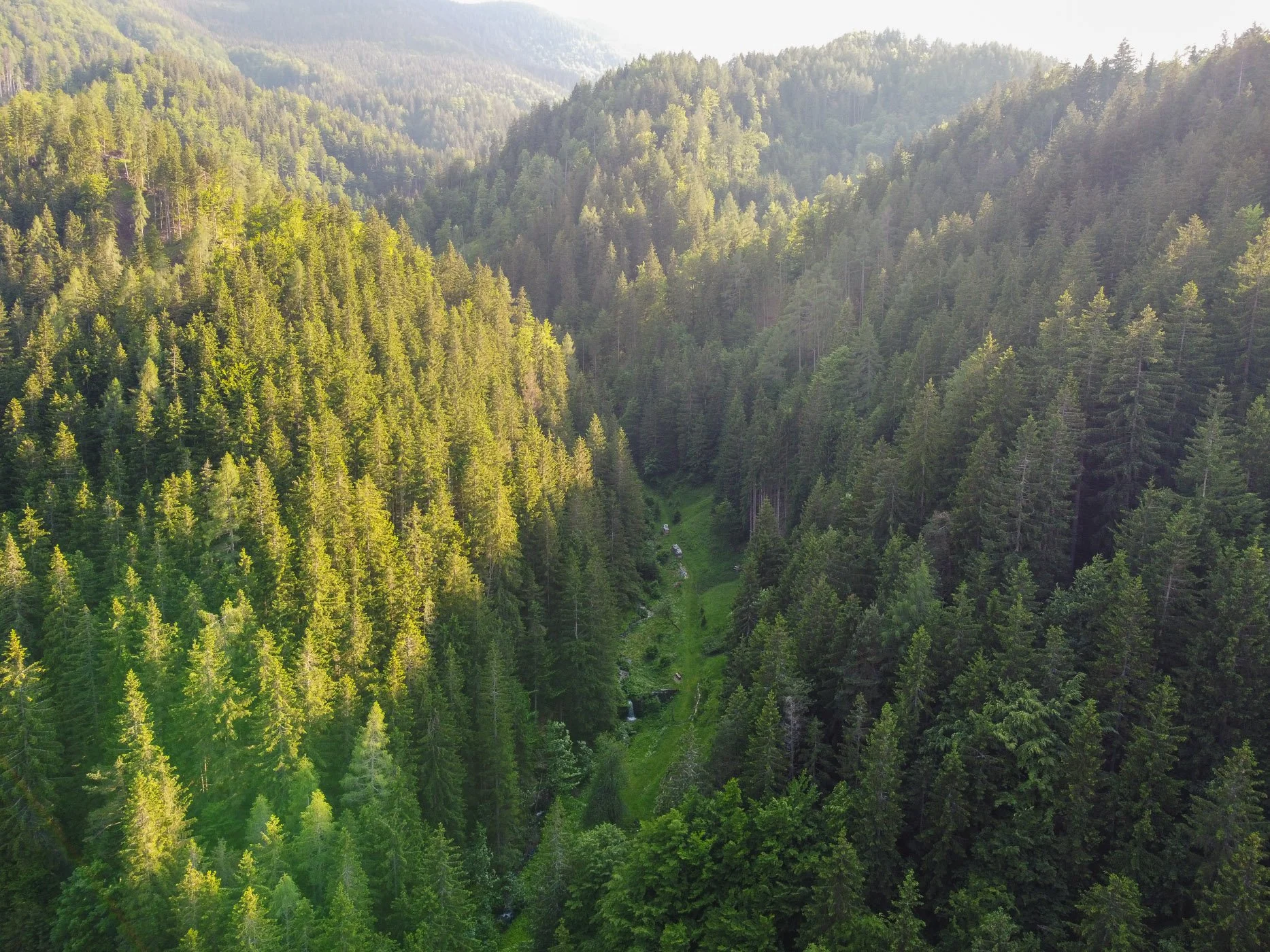
Water continues to shape this place, reminding us how closely forests, land use, and life are tied to its movement. There is so many streams everywhere, but water comes differently now — faster, with less patience.
The question is not how to return to the past, but how to support forests, waters, and ways of living that can still adapt and continue here.
Photo: Nick St. Oeger, https://www.stoeggerphotography.com